CIVITAS 2026 Book Series
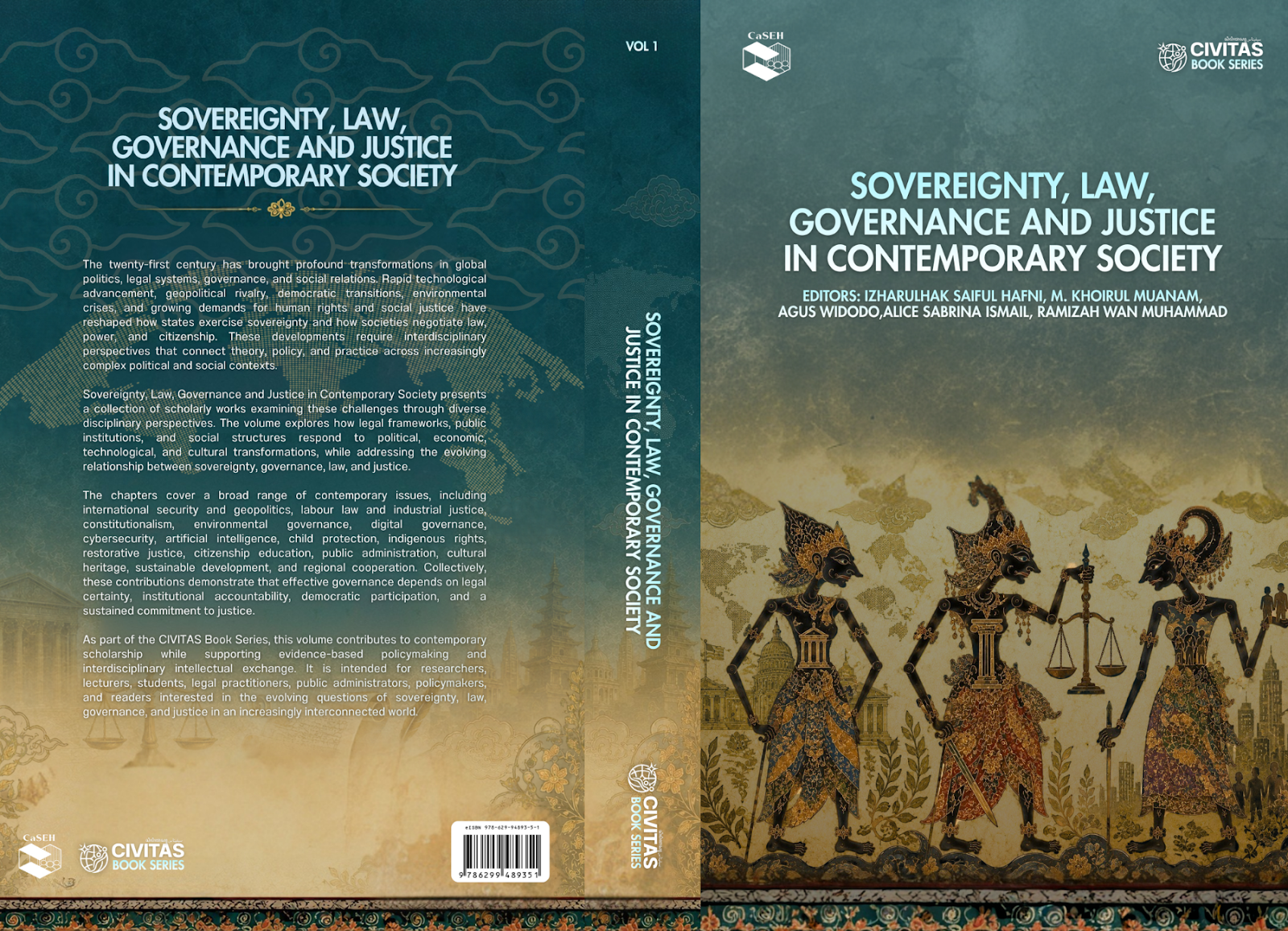
Editors
 Izharulhak Saiful HafniM. Khoirul MuanamAgus Widodo
 Alice Sabrina IsmailRamizah Wan Muhammad
Book Information
Publisher:
Center of Conservation for Sustainable Ethnic Heritage (CaSEH)
Edition:
First Edition, September 2026
eISBN:978-629-94893-5-1
Cataloguing Record:
Malaysia National Library (PNM)
Synopsis
Institutionalising the law and safeguarding justice requires a rigorous understanding of sovereignty, governance, and legal administration. These core principles form the bedrock of an effective legal system, one capable of maintaining public order, upholding equity, and advancing the rule of law.
This volume examines specific, bounded controversies through doctrinal, comparative, and empirical legal analysis. The twenty-one chapters in this collection explore social justice within formal legal and economic frameworks, investigate how religious and customary legal systems adapt to modern regulatory landscapes, and address cross-border governance challenges in an interdependent Southeast Asia.
Rather than proposing sweeping resolutions, these essays test conventional legal scholarship against multiple fronts simultaneously, offering nuanced insights into the complexities of contemporary legal systems.
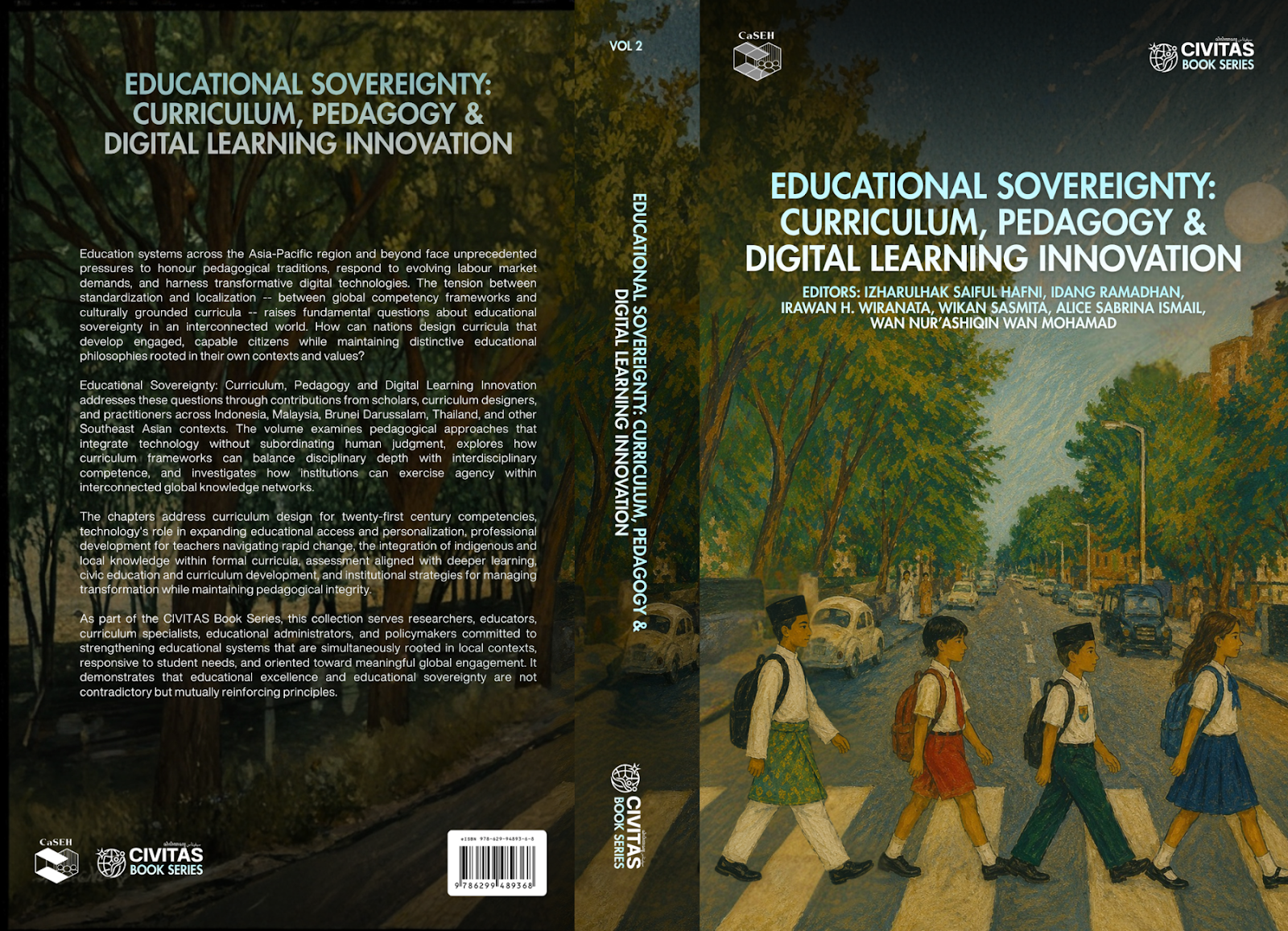
Editors
Izharulhak Saiful HafniIdang RamadhanIrawan Hadi WiranataWikan SasmitaAlice Sabrina IsmailWan Nur’ashiqin Wan MohamadBook Information
Publication:
Centre of Conservation for Sustainable Ethnic Heritage (CASEH)
eISBN:978-629-94893-6-8
Cataloguing Record:
Malaysia National Library (PNM)
Year of Publication:
2026
Synopsis
Education systems across Southeast Asia and the Pacific are being reshaped simultaneously by curricular reform, digital transformation, and heightened attention to student wellbeing. The chapters gathered in this volume were selected to reflect that convergence, drawing on original research conducted in Indonesian primary and secondary schools, Malaysian and Filipino higher education institutions, and communities across Fiji and the wider Pacific.
The volume opens with several chapters that take a bird's-eye view of research trends themselves, using bibliometric and systematic-review methods to map scholarship on dual language education, discovery learning, and contemporary Islamic education. It then moves into studies grounded in specific classrooms and curricula, examining how teachers in Indonesia are implementing the Merdeka Curriculum, integrating Pancasila values and local wisdom (including Hamzanwadi and Riau Malay traditions) into instruction, and reorienting Arabic-language teaching toward twenty-first-century competencies such as STEAM integration and digital literacy.
A substantial cluster of chapters addresses English language teaching and learning, spanning vocabulary acquisition through Kahoot! and Wordwall.net, speaking proficiency through role-play, peer storytelling, and the dictogloss method, and self-efficacy and anxiety among EFL learners. Related chapters extend this attention to digital and data-driven approaches to education more broadly, including clustering-based frameworks for personalised learning and podcast-based instruction in English for Specific Purposes.
The closing chapters turn to the psychosocial dimensions of student life: academic procrastination, fear of missing out, peer interaction, and the use of psychodrama, game-based guidance media, and cognitive-behavioural techniques to support adolescent mental health and learning engagement.
Read together, these thirty-five chapters do not offer a single unified theory of education. Instead, they offer something arguably more useful to practitioners and policymakers alike: a detailed, multi-site record of how curriculum reform, digital innovation, and student wellbeing are actually being negotiated in classrooms and communities across the region today.
 Davendra Sharma
 Mark Romy E. Nanali, Jerry B. Carreon, Joselito G. Fernando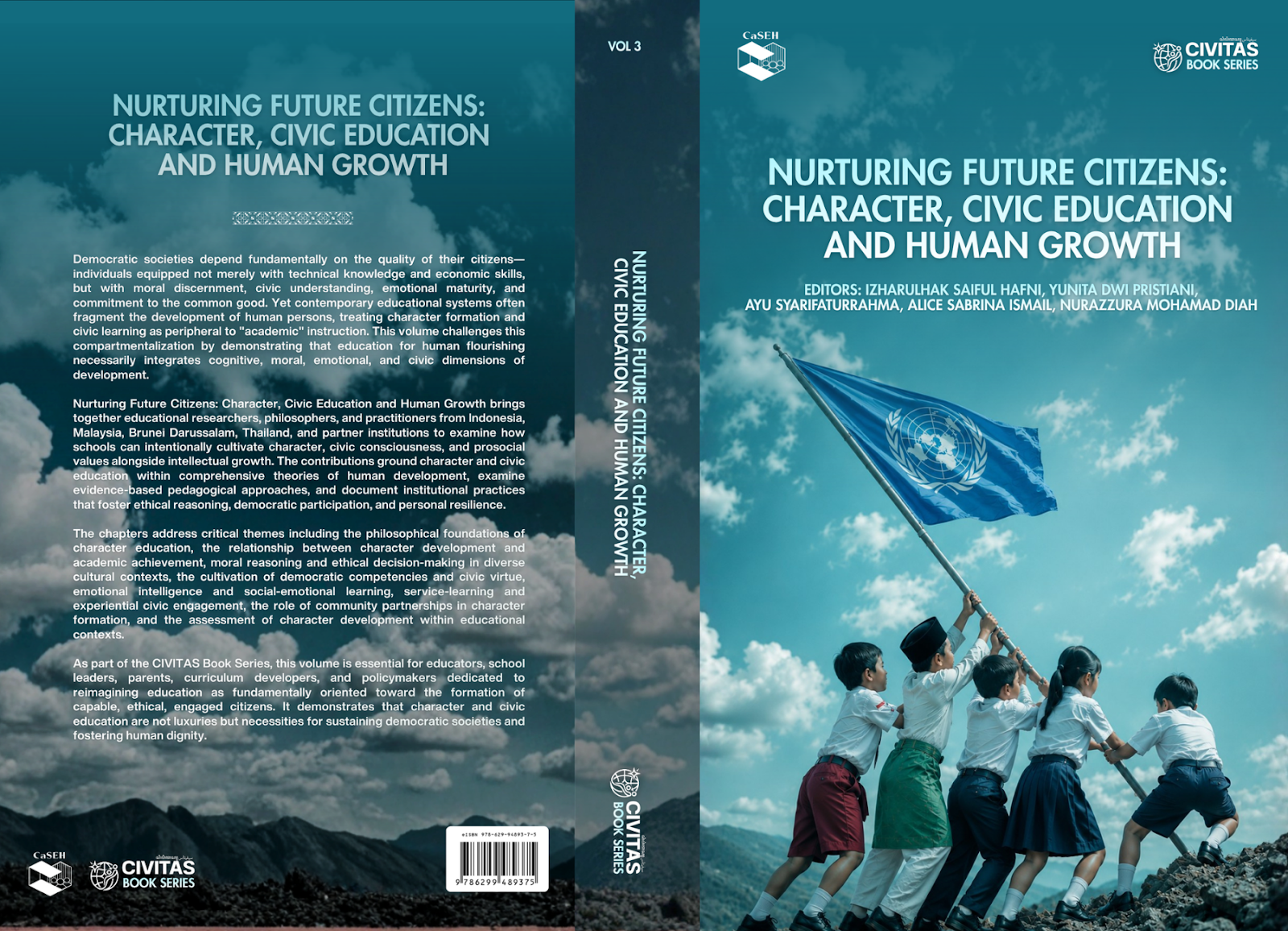
Editors
Izharulhak Saiful HafniYunita Dwi PristianiAyu SyarifaturrahmaAlice Sabrina IsmailNurazzura Mohamad DiahBook Information
Publication:
Centre of Conservation for Sustainable Ethnic Heritage (CASEH)
Publisher:
PPKn UNP Kediri
Edition:
First Edition, August 2026
eISBN:978-629-94893-7-5
Cataloguing Record:
Malaysia National Library (PNM)
Extent:
xxii + 782 pages : ill. : 16 × 24 cm
Publication Registration No.:
9786299489375 - 20260917063637
Synopsis
Education is never merely a technical enterprise. Behind every curriculum document, lesson plan, and classroom routine lies a question about the kind of human being and citizen education seeks to cultivate. This volume brings together research that treats character formation, civic capability, and human growth as interconnected dimensions of educational work.
The chapters draw on research conducted in Indonesia, Malaysia, and Bhutan, alongside studies with broader global frames of reference. They range across curriculum reform, guidance and counselling, teacher preparation, religious and moral education, inclusive schooling, civic learning, and the uses and challenges of digital media.
Across the collection, contributors examine philosophical and spiritual foundations of character education, the relationship between culture and identity, curriculum and pedagogical innovation, student wellbeing and inclusion, teacher professional development, and digital conditions of contemporary education. The volume brings together systematic reviews, classroom and school-based studies, quantitative analyses, qualitative case studies, and conceptual work.
Rather than imposing a single theoretical idiom, the volume preserves this methodological and disciplinary variety while maintaining a common architecture that distinguishes claims, evidence, and implications. It is offered to teachers, teacher educators, counsellors, school leaders, postgraduate students, and policymakers as a practical scholarly record of how education is being negotiated in classrooms and communities.
 Sonam Choden, Yeshi Samdrup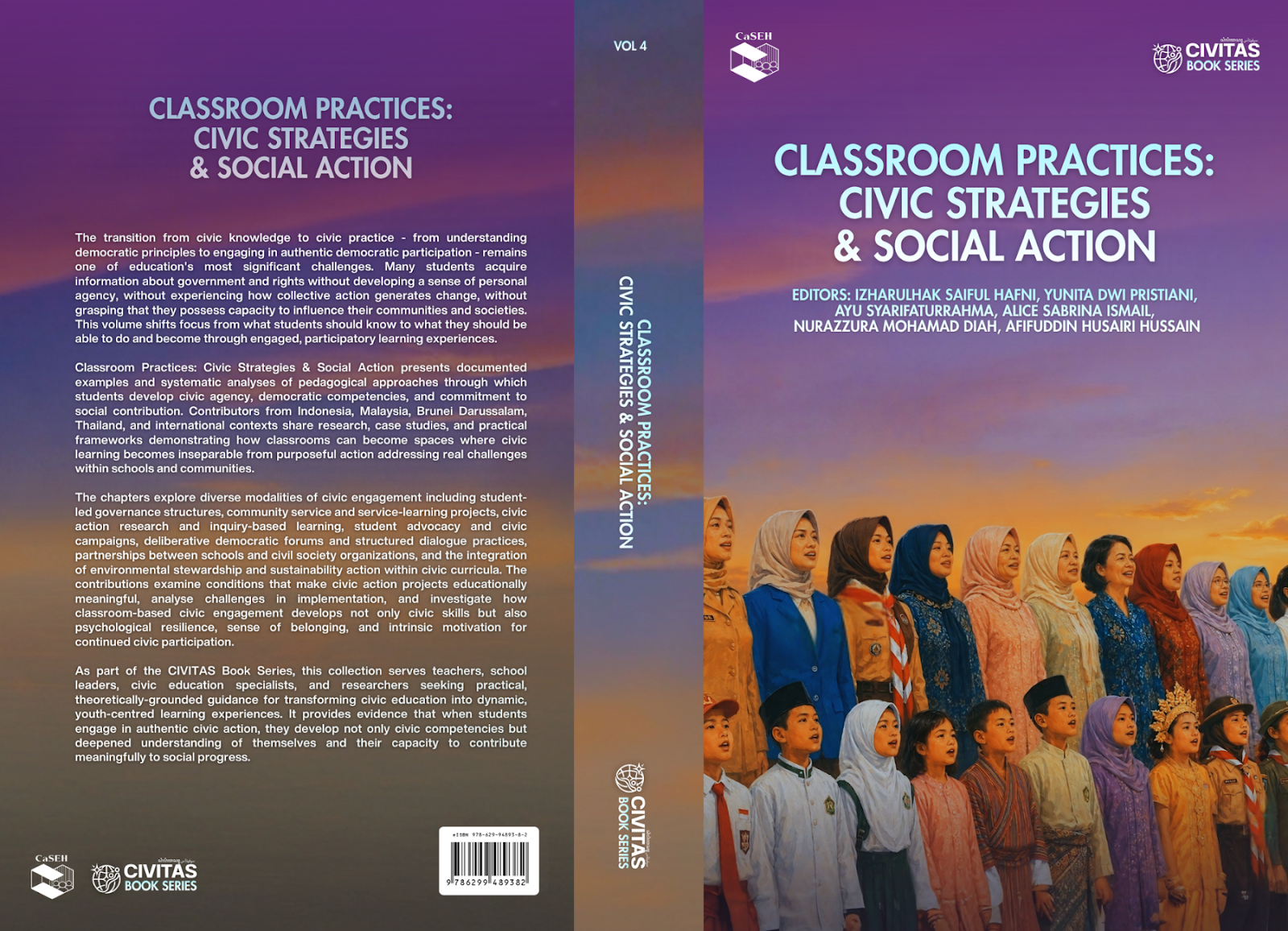
Editors
Izharulhak Saiful HafniYunita Dwi PristianiAyu SyarifaturrahmaAlice Sabrina IsmailNurazzura Mohamad DiahAfifuddin Husairi HussainBook Information
Publication:
Center of Conservation Sustainable Heritage (CaSEH), Perbadanan Muzium Melaka (PERZIM)
Publisher:
PPKn UNP Kediri
Edition:
First Edition, September 2026
eISBN:978-629-94893-8-2
Extent:
xxii + 672 pages : ill. : 16 × 24 cm
Publication Registration No.:
9786299489382 - 20260917063637
Synopsis
This volume explores how educational ideas become visible in the everyday experiences of learners across classrooms, schools, counselling settings, and wider educational institutions. Its chapters examine teaching methods, student behaviour, character formation, civic learning, guidance and counselling, organisational participation, digital literacy, and social development, highlighting how educational environments shape students’ knowledge, confidence, responsibility, and capacity to participate.
Grounded primarily in Indonesian educational contexts, the chapters cover vocational and secondary schools, elementary classrooms, special education, madrasahs, and universities. The studies address diverse issues, including learning strategies, student confidence, teacher motivation, cooperative learning, civic and nationalist character, school discipline, ecological citizenship, parental digital literacy, pluralism, artificial intelligence, religious and moral education, traditional games, lifelong learning, student wellbeing, migrant workers’ children, and peer support in relation to bullying.
The volume brings together quantitative, qualitative, ethnographic, phenomenological, and literature-based approaches. Rather than imposing a single theoretical framework, the editors preserve this methodological diversity while emphasizing evidence, context, and the practical conditions shaping educational practice. The findings are presented as contextually grounded contributions rather than universal prescriptions, with their limitations and possibilities for further research acknowledged.
We offer this book to teachers, teacher educators, counsellors, school leaders, researchers, postgraduate students, and education practitioners as a contribution to scholarly reflection and the continuing improvement of learning and student development.
Editors
Izharulhak Saiful HafniRosli NorAlice Sabrina IsmailAhmad Najib Ariffin Khatijah Othman
Book Information
Publication:
Center of Conservation Sustainable Heritage (CaSEH), Perbadanan Muzium Melaka (PERZIM)
Publisher:
PPKn UNP Kediri
Edition:
First Edition, September 2026
eISBN:978-629-92999-5-0
Extent:
xxxix + 889 pages : ill. : 16 × 24 cm
Publication Registration No.:
9786299299950-20260921073709
Publication Year:
2026
Synopsis
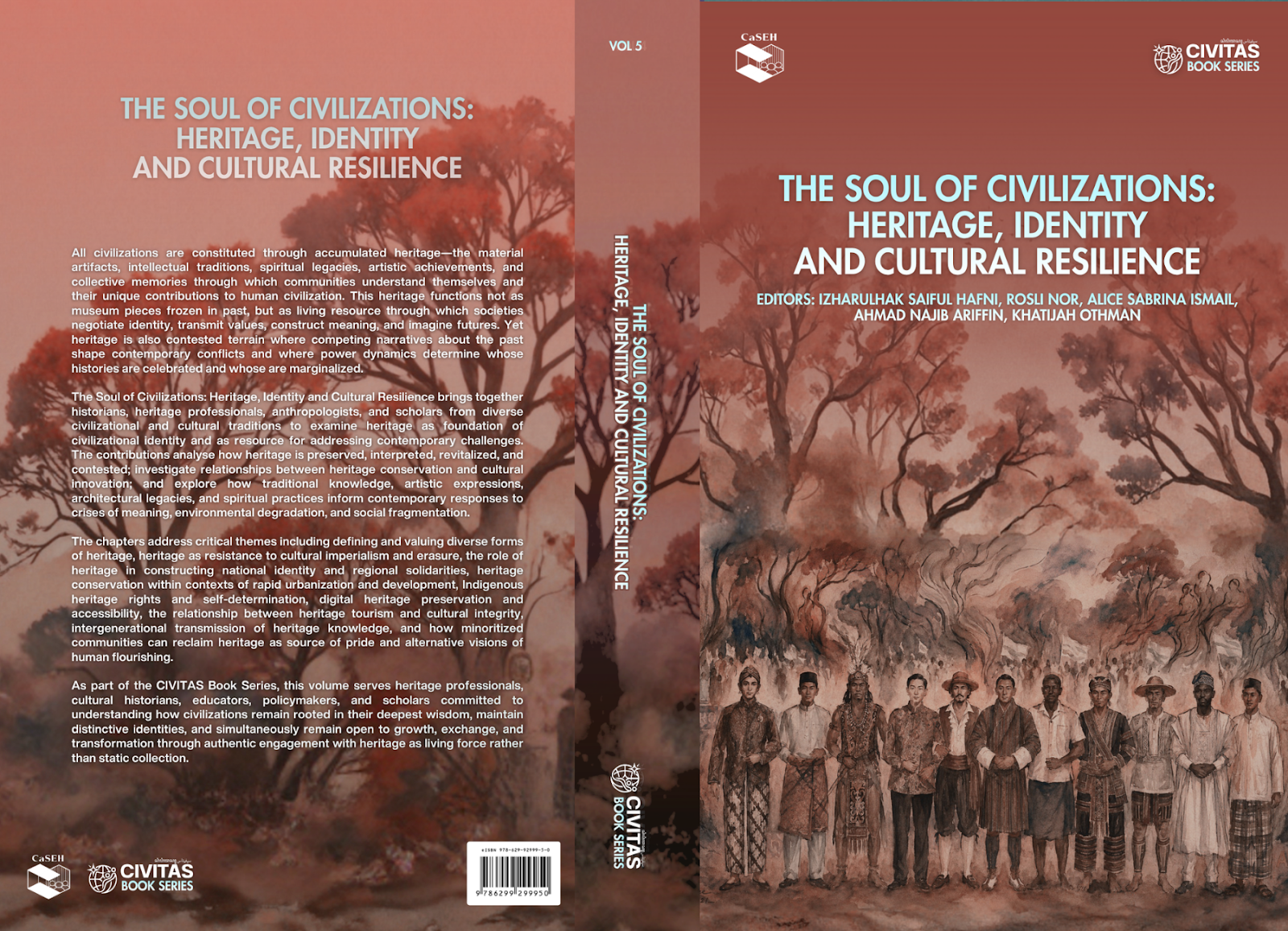
The Soul of Civilizations: Heritage, Identity and Cultural Resilience brings together thirty-three original studies from scholars and practitioners across Indonesia, Malaysia, the Philippines, and beyond. The volume examines how communities preserve, negotiate, and reinvent heritage amid globalization, digital transformation, and rapid social change.
The collection opens with education and knowledge transmission, exploring language education, digital learning, and community-based pedagogy as sites where local wisdom is adapted to contemporary needs while cultural continuity is maintained. It then turns to discursive and religious dimensions of identity, including Sufi movements, gender and masculinity in classical poetry, Islamic work ethics, and cultural heritage as contested terrain.
A substantial section addresses contemporary social ethics and human wellbeing, including institutional responses to campus sexual violence, communication ethics on digital platforms, interreligious tolerance in ritual practice, and the psychological pressures associated with belonging. Environmental and ecological concerns are likewise examined through studies of ecological citizenship, oil capitalism, ecocriticism, flood-risk governance, seismic resilience, and social accountability.
The closing chapters broaden heritage studies through investigations of everyday culture, built environments, food traditions, heritage architecture, urban regeneration, cultural heritage governance, indigenous industrial knowledge, and mobility justice. Taken together, the studies present heritage as a living and continually reconstructed dimension of civilizational identity, connecting linguistic, religious, ecological, digital, medical, and architectural perspectives across the region.
 Fazli Elahi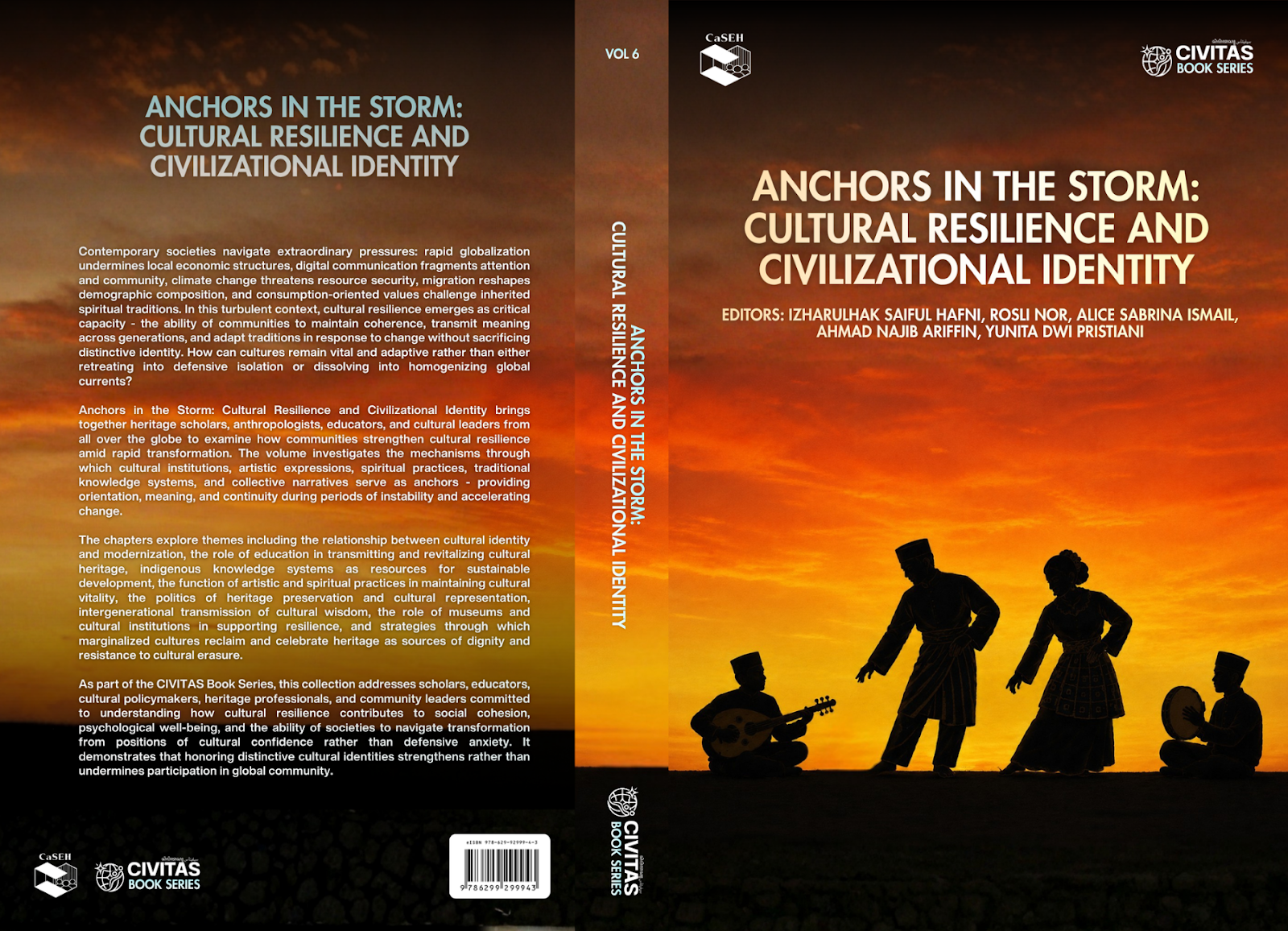
Editors
Izharulhak Saiful HafniYunita Dwi PristianiRosli NorAlice Sabrina IsmailAhmad Najib AriffinBook Information
Publication:
Center of Conservation Sustainable Heritage (CaSEH), Perbadanan Muzium Melaka (PERZIM)
Publisher:
PPKn UNP Kediri
Edition:
First Edition, September 2026
eISBN:978-629-92999-4-3
Extent:
xxiii + 857 pages : ill. : 16 × 24 cm
Publication Registration No.:
9786299299943-20260921073027
Publication Year:
2026
Synopsis
Anchors in the Storm: Cultural Resilience and Civilizational Identity brings together twenty-eight original studies from scholars and practitioners across Indonesia, Malaysia, India, the Philippines, and beyond. The volume asks how communities hold fast to their cultural foundations while navigating globalization, digital disruption, urbanization, and shifting regional politics.
The collection opens with customary wisdom and local economies, from the Nias ethos of fondrako and the moral economy of the Yogyakarta kampung to ergonomic innovation in Palembang songket weaving. It then turns to heritage in regional and diplomatic life, examining the ASEAN kebaya joint nomination, batik truntum in cultural diplomacy, the securitization of heritage and underwater cultural heritage, and the shared civilizational inheritance of yoga and Ayurveda between India and Indonesia.
A substantial section addresses language, education, and citizenship, including the maintenance of the Hubla language in urban Jayapura, humanistic values from the Sarasamuccaya for global citizenship education, local history in causal learning, traditional games for adolescent self-esteem, and Pancasila values expressed through wedding customs, rural tolerance, and everyday practice. Further chapters explore village arts groups, masked wayang, recognition politics among the O'hongana Manyawa, and livelihood change in Sumenep.
The closing chapters bring heritage into conversation with the contemporary city and the digital world, through smart-city policy in Indonesia and Japan, cultural representation in video game design, batik styled for a glocal Gen Z, and heritage-based tourism in Jombang. Taken together, the studies present culture not as a relic to be preserved behind glass but as an anchor that allows communities to remain themselves while weathering the storms of change.
 Sanket Agarwal
 Bryan Anthony Oliva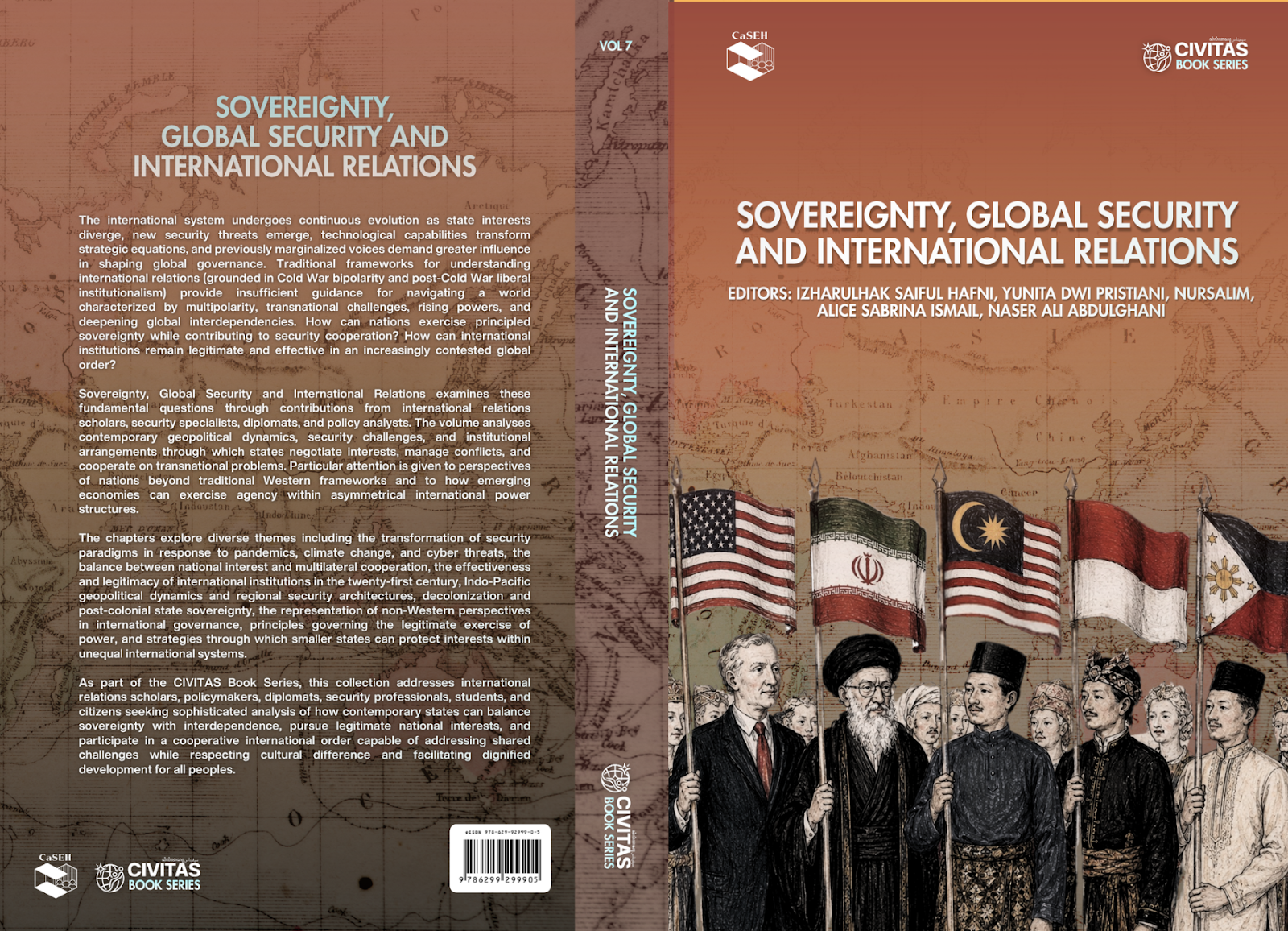
Editors
Izharulhak Saiful HafniYunita Dwi PristianiNursalimAlice Sabrina Ismail Naser Ali Abdulghani Idrees
Book Information
Publication:
Center of Conservation Sustainable Heritage (CaSEH), Perbadanan Muzium Melaka (PERZIM)
Publisher:
PPKn UNP Kediri
Edition:
First Edition, August 2026
eISBN:978-629-92999-0-5
Extent:
vii +804 pages : ill. : 16 x 24 cm
Publication Registration No.:
978629929905 - 20260917065028
Publication Year:
2026
Synopsis
Sovereignty, Global Security and International Relations brings together thirty-seven original studies from scholars and practitioners across Indonesia, Sri Lanka, Burundi, Georgia, Libya, and beyond. The volume examines how states, regional institutions, and societies defend sovereignty and human welfare amid great-power rivalry, regional conflict, and rapid technological change.
The collection opens with shifts in the global balance of power, from the emerging multipolar order and AUKUS to the Russia–Ukraine war, US–China rivalry in the South China Sea, and the securitization of semiconductors and artificial intelligence. It then turns to Southeast Asia, examining ASEAN's responses to the Myanmar crisis, online scam networks in Cambodia, the Preah Vihear dispute, Rohingya arrivals in Indonesia, and grey-zone tactics in the North Natuna Sea.
A substantial section addresses non-traditional security threats, including health and political disinformation, deepfakes, ransomware, data breaches, attacks on critical infrastructure, and the securitization of digital platforms. Further chapters consider climate change as a threat multiplier, transboundary resource disputes such as the Grand Ethiopian Renaissance Dam, and the roles of diplomacy, heritage, customary law, and education in building resilience and cohesion.
Taken together, the studies present security not only as a matter of military power but as a question of human welfare, information integrity, and cultural continuity, offering students, scholars, diplomats, and policymakers grounded perspectives on how sovereignty is contested and defended in an interdependent world.
 M.M. Fazil
 Arakaza Dionise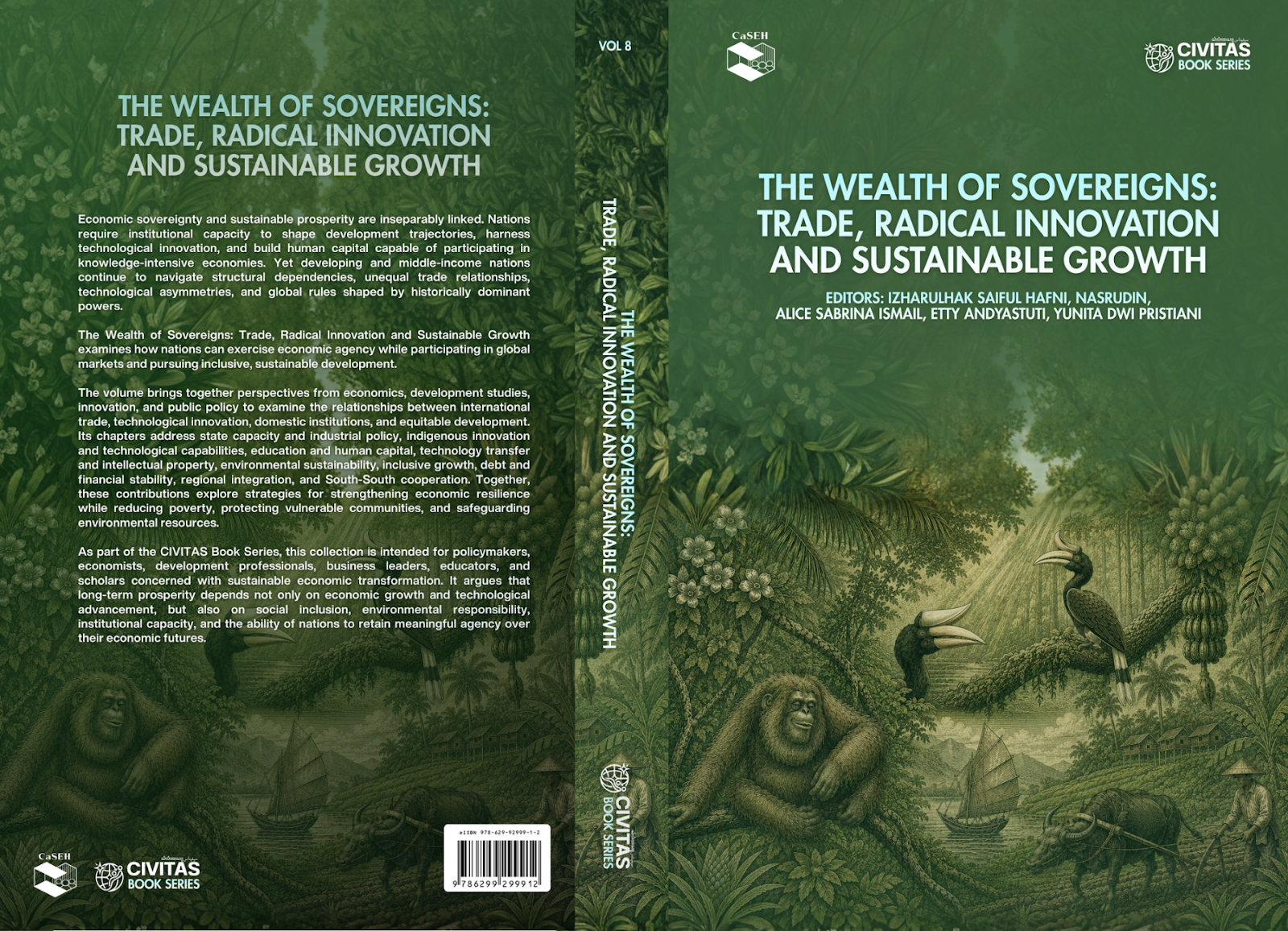
Editors
Izharulhak Saiful HafniNasrudinAlice Sabrina IsmailEtty AndyastutiYunita Dwi PristianiBook Information
Publication:
Center of Conservation Sustainable Heritage (CaSEH), Perbadanan Muzium Melaka (PERZIM)
Publisher:
PPKn UNP Kediri
Edition:
First Edition, August 2026
eISBN:978-629-92999-1-2
Extent:
xx + 467 pages : ill. : 16 × 24 cm
Publication Registration No.:
9786299299912-20260917065540
Publication Year:
2026
Synopsis
The Wealth of Sovereigns: Trade, Radical Innovation and Sustainable Growth brings together twenty-seven original studies from scholars and practitioners across Indonesia, Malaysia, Thailand, Somalia, Mongolia, and beyond. The volume examines how nations, communities, and enterprises build prosperity that is both competitive and sustainable in an era of digital disruption and shifting global trade.
The collection opens with ethical and social foundations of economic life, including maqasid al-shariah compliance among livestock-trading MSMEs, waqf as sustainable funding for shelters protecting trafficking victims, child-marriage prevention for sustainable population development, and community empowerment among fish-cracker entrepreneurs in Kelantan. It then turns to regional growth strategies, from regional hub formation in Southeast Asia and halal tourism in Singapore and Johor to downstream industrial policy in South Sumatra and the governance of gold resources in Merangin.
A substantial section addresses finance, accounting, and fiscal governance, covering accounting conservatism, cooperative tax compliance, taxpayer perceptions of bank-data oversight, stock-market volatility, predictors of financial distress, and alternative financing for MSMEs. Further chapters explore digital and creative economies, including FinTech in Greater Somalia, Shopee-based business strategy, the creative economy and café-working culture of Denpasar's youth, and AI-driven transformation in drug discovery.
The closing chapters widen the lens to global and institutional challenges, from UN preventive measures against the economic fallout of conflict in the Strait of Hormuz to university–industry–government collaboration in Mongolia. Taken together, the studies present wealth not merely as accumulation but as the capacity of sovereign communities to trade, innovate, and grow in ways that are just and enduring.
 Wanhasnah Waenawe
 Elisabeth Sinu
 Odmaa Dangaasuren, Bulgamaa Ganzorig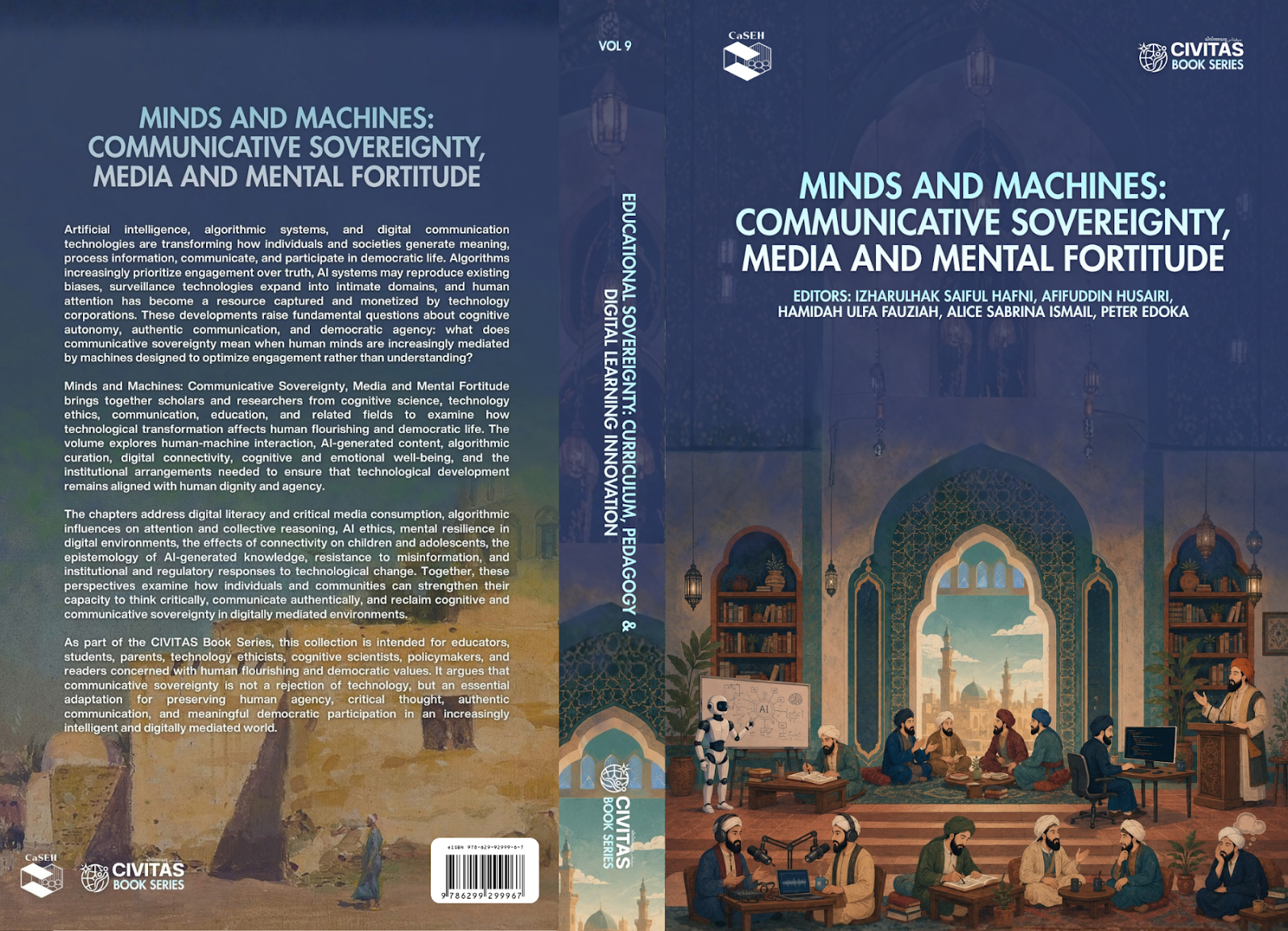
Editors
Izharulhak Saiful HafniAfifuddin Husairi HussainHamidah Ulfa FauziahAlice Sabrina Ismail Peter Edoka
Book Information
Publication:
Center of Conservation Sustainable Heritage (CaSEH), Perbadanan Muzium Melaka (PERZIM)
Publisher:
PPKn UNP Kediri
Edition:
First Edition, August 2026
eISBN:978-629-92999-6-7
Extent:
xxii + 488 pages : ill. : 16 × 24 cm
Publication Registration No.:
Publication Year:
2026
Synopsis
Minds and Machines: Communicative Sovereignty, Media and Mental Fortitude brings together twenty-seven original studies from scholars and practitioners across Indonesia, Malaysia, Brunei Darussalam, Palestine, and beyond. The volume examines how individuals and societies preserve their voice, judgment, and wellbeing as artificial intelligence and digital media reshape the way people learn, communicate, and understand the world.
The collection opens with human–AI collaboration in academic writing and the influence of user-generated content on Generation Z, then turns to mental fortitude and psychological wellbeing, including community resilience after flooding, fear of missing out, self-confidence and interpersonal communication, truthful behaviour among adolescents, and cognitive-behavioural counselling for junior high school students. Chapters on inclusive pedagogy, pastoral counselling, and Paulo Freire's thought extend these concerns to education and community empowerment.
A substantial section addresses communication ethics and media practice, from netiquette on Instagram and TikTok and Bugis tabe' politeness norms online to multicultural media in Southern Thailand, access to urban cinema, and the framing of Israel–Palestine demonstrations, the Sumud Flotilla, and crisis communication in Gaza. Further chapters examine digital literacy against AI-generated content and information manipulation, ethical dilemmas in AI use, and AI as a non-traditional security threat to states and to ASEAN's cultural heritage.
The closing chapters bring in technical and linguistic perspectives, including AI-based nutritional monitoring for toddlers, image encryption, and classical and modern Arabic grammar. Taken together, the studies argue that communicative sovereignty depends as much on critical minds and resilient communities as on the machines that increasingly mediate human life.
 Fathee Shubair